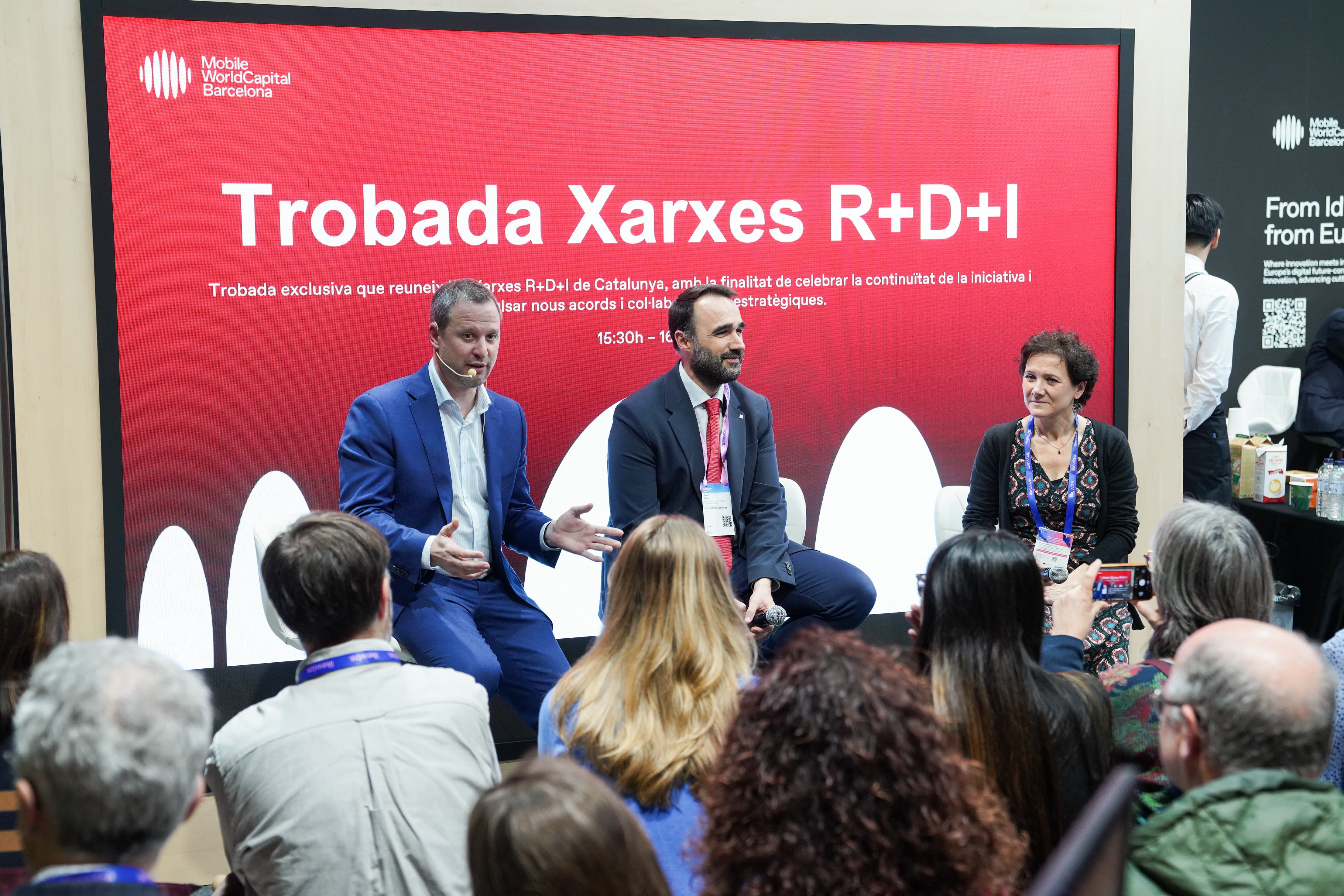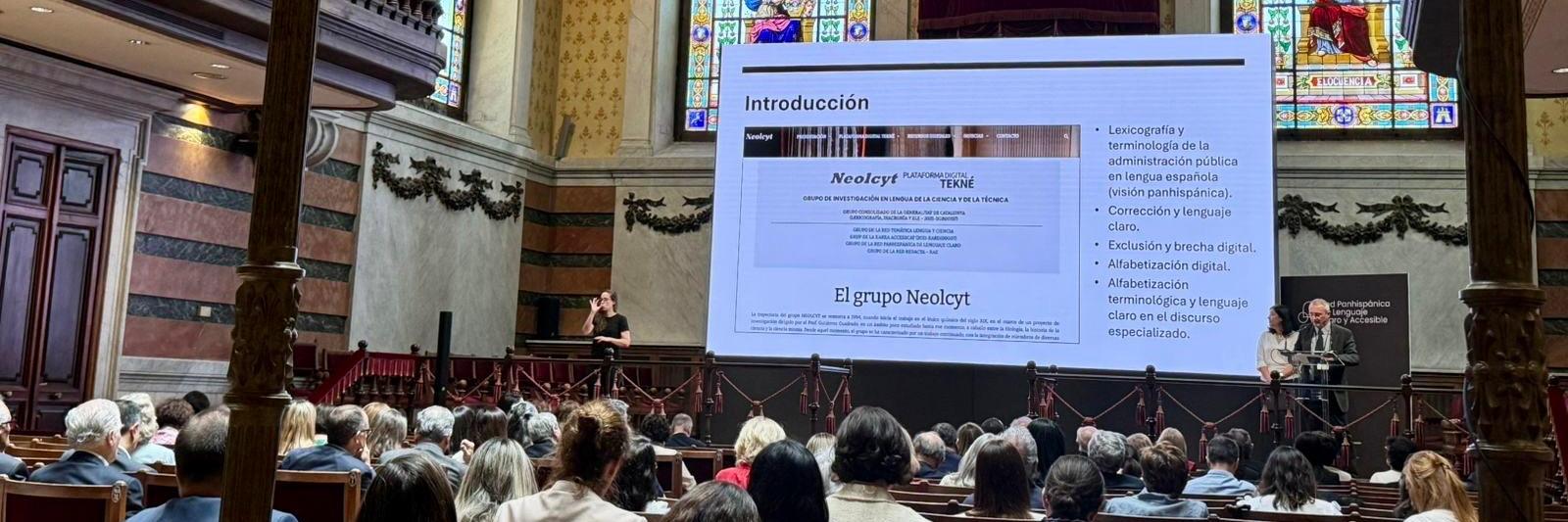
The network had a stand at 4YFN, the space dedicated to startups and investment, while its researchers and members of the Executive Committee took part in several talks.
The Mobile World Congress is considered the largest and most influential technology event in the world. A fair that each year surpasses its records for attendance and participation, and where technology giants and representatives from dozens of countries are always present. However, at the MWC the focus is not only on developments in the mobile and technology sector; the congress also dedicates space to discussions on connected industry, diversity, equity and inclusion through technology, as well as research and knowledge developed at universities.
It is within this context that the AccessCat Network once again took part in 4YFN, the event held within the framework of the MWC that serves as a global showcase for companies, technologies and emerging solutions. From 2 to 4 March, we shared a stand with the RDI-IA Network to present the technologies promoted as an innovation network.
During these days, we were joined by several research groups:
- GRIHO (UdL), which presented research and innovation in accessibility applied to UX.
- TransMedia Catalonia (UAB), which presented projects related to digital accessibility and virtual reality.
- TALN (UPF), with its research on accessibility in democratic processes.
- CLiC (UB), which demonstrated SCRIBAL technology for specialised transcription.
At the same time, we had the opportunity to take part in several talks:
- Carme Pratdesaba, project manager of the network, delivered the welcome speech at the Network of Networks meeting, as AccessCat is the current coordinator. The event, organised at the Mobile World Capital Barcelona venue, brought together all RDI networks and representatives from the Government of Catalonia. During her speech, Pratdesaba highlighted the transversal nature of the networks, how they connect all the fields in which each operates, and the importance of this knowledge transfer instrument in both accessibility and the social sciences and humanities, as the network proves to be a strong accelerator for research beyond technology, introducing new ways of understanding transfer.
- Researcher Estel·la Oncins (TransMedia Catalonia, UAB) took part in the Humanising Technology series with a pitch on research, accessibility and technology.
- Researcher Sergi Grau (Digital Care, UVic-UCC) participated in the round table “Inclusion and Future: how AI ensures equal opportunities”, organised by the Digital Catalonia Alliance (DCA) within the ACCIÓ stand, where he presented NeurekaLAB, a spin-off of the group and an entity affiliated with the network.