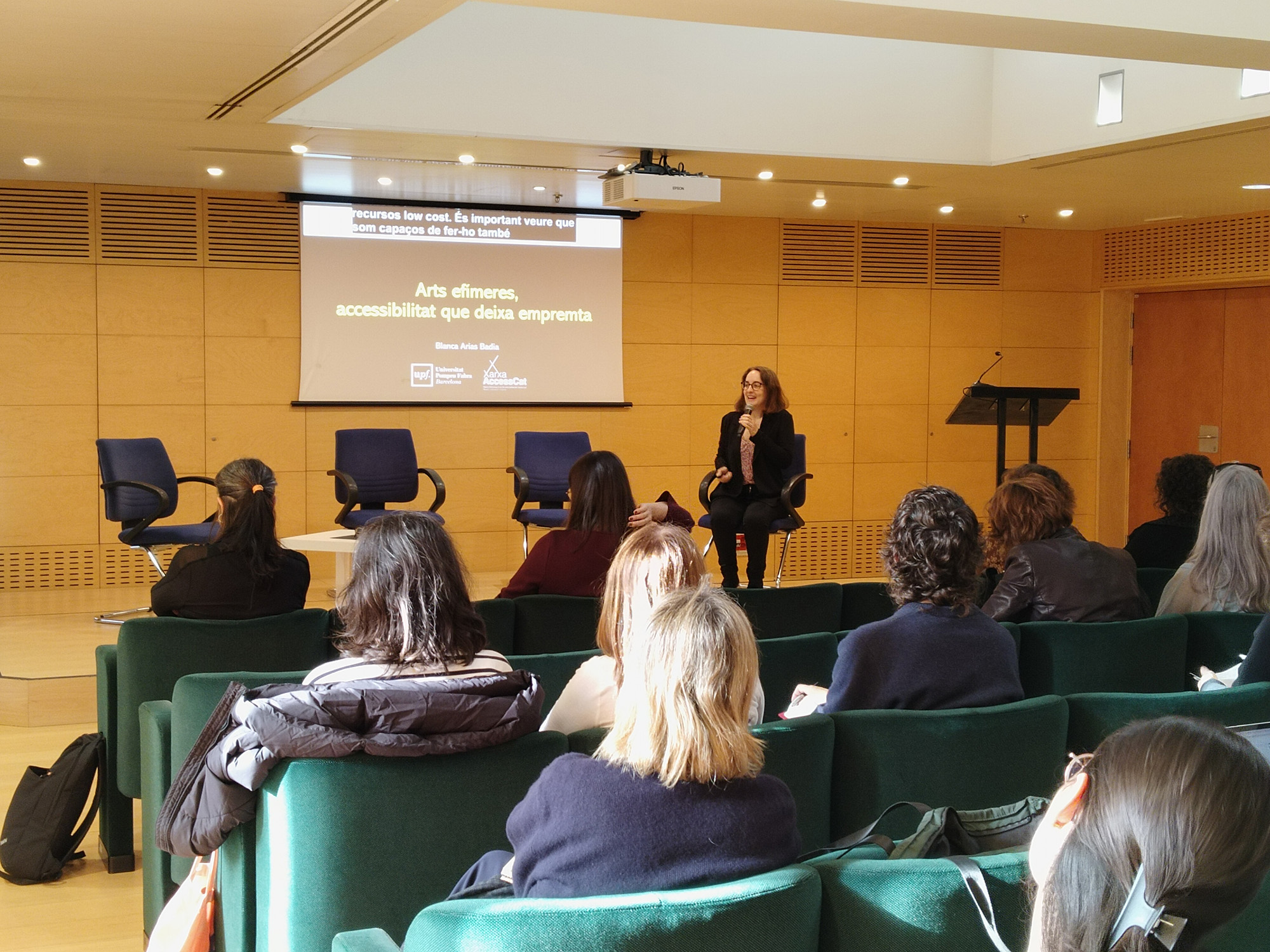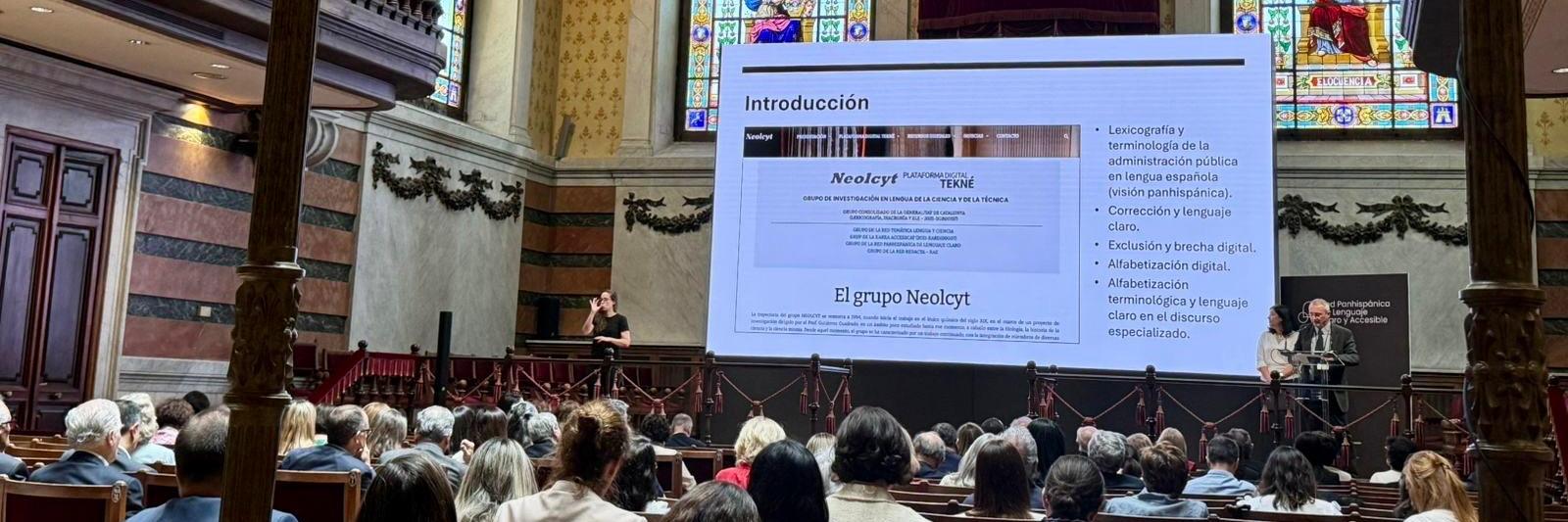
The researcher participated in the session “Accessibility in ephemeral performing, musical, and audiovisual arts: first-hand experiences,” organized by ICEC.
The ICEC and the Government of Catalonia organised, with the aim of promoting the implementation of the Accessibility Code of Catalonia, a training session on accessibility and ephemeral cultural events, titled “Accessibility in ephemeral performing, musical, and audiovisual arts: first-hand experiences.”
The event took place through several presentations and a roundtable, and included researchers, experts, and accessibility user organisations, aiming to foster dialogue between institutions, service providers, users, and professionals.
Several experts and professionals linked to the AccessCat Network participated in the event: representatives from the affiliate entities Èlia Sala, Dincat, Gran Teatre del Liceu, and Subtil, as well as TraDiLex (UPF) researcher Blanca Arias. These are some of the conclusions Arias highlights from her presentation:
- Participation in cultural life is a right of all people, enshrined in the Universal Declaration of Human Rights (United Nations, 1948). By nature, street arts bring culture closer to people, revitalise public spaces, encourage citizen participation, and stimulate reflection and social transformation. Similarly, ephemeral festivals are a key element of contemporary culture, with a clear economic and social impact. It is important that these cultural events be designed with accessibility in mind to avoid excluding people with disabilities.
- The Accessibility Code does not clearly define guidelines for street arts as it does for other disciplines but, rather than a disadvantage, this is understood as an opportunity to innovate and experiment in accessibility.
- Being more accessible is necessary for social awareness, for compliance with regulations, and for the economic benefits of positioning oneself as an inclusive organisation within the cultural sector.
- A crucial step in improving accessibility is identifying the different elements of a performance and deciding which to prioritise for accessibility. Tools such as study frameworks from the field of audiovisual translation can be helpful. Likewise, transparency in communicating available services is important whenever possible.
More information is available in the AccessCat Decalogue for Accessibility in Street Arts.