The Catalan Institute of Classical Archaeology hosted this event, which aims to foster a space for exchange and reflection on how to improve inclusion in this field.
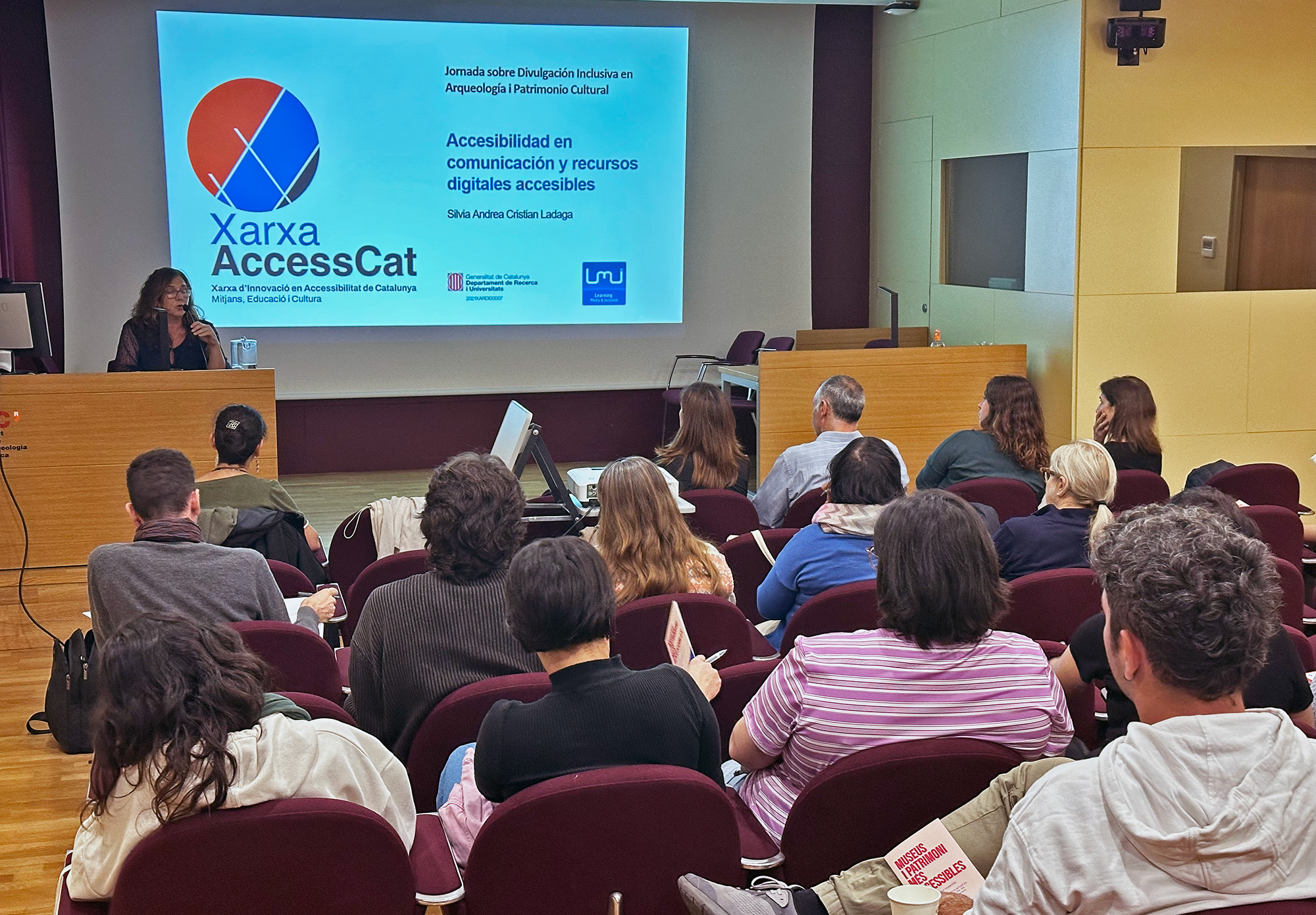
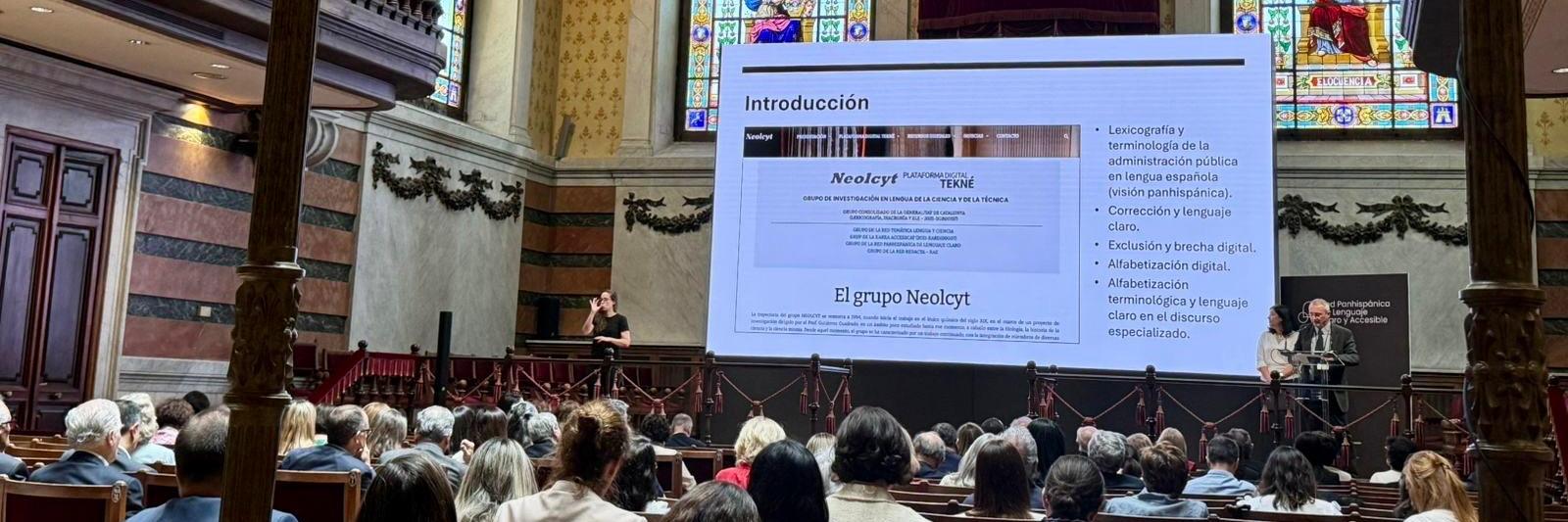
Last 5 November, three groups from the AccessCat Network–GIAP (ICAC), DIDPATRI (UB), and LMI (UB)–promoted the Conference on Inclusive Outreach in Archaeology and Cultural Heritage. This space addressed how to improve accessibility to archaeological research and heritage, as well as deepening knowledge about accessibility issues that should be taken into account when disseminating and transferring research results and archaeological heritage.
The event, held at the Catalan Institute of Classical Archaeology’s headquarters, was divided into two main parts.
- The first part, titled Accessibility Research in Catalonia: Tools for Inclusive Dissemination of Research in Archaeology and Heritage, gave a voice to the AccessCat Network researchers Andrea Granell (Didpatri), Cris Ladaga (LMI), and Mireia Ribera (Adaptabit). They spoke respectively about the legal framework of accessibility from the European to the Catalan context, about how to overcome communication barriers and be accessible in digital environments, and about how to promote teaching innovation at universities based on an inclusive perspective. A space for debate and very lively participation accompanied this section, followed by a networking coffee break.
- The second part, titled Entities and Institutions Specialising in Accessibility: Opportunities and Challenges for Promoting an Inclusive Scientific Culture in Archaeology and Heritage, focused on the importance of understanding and addressing the diversity of groups with disabilities. With presentations by Ramon Coma (CRE-ONCE), Laia Vidal (Easy-to-Read Association), and Marta Romero (Aprenem Autisme), the session explored the challenges and needs faced by persons who are blind or have low vision, individuals with reading difficulties, and neurodivergent groups, such as persons on the autism spectrum. The session also highlighted the tools, resources, and materials available to offer adapted content and improve the outreach experiences of persons with disabilities.
The conference concluded with a presentation given by experts Gerard Remolins (Regirarocs) and Juan Gibaja (Milà i Fontanals Institution-CSIC), who stressed the importance of empathy, understanding experience as learning in action, creativity to overcome challenges, interdisciplinarity to provide diverse and cross-cutting solutions, and the promotion of genuine participation by citizens and users.